EN
EN



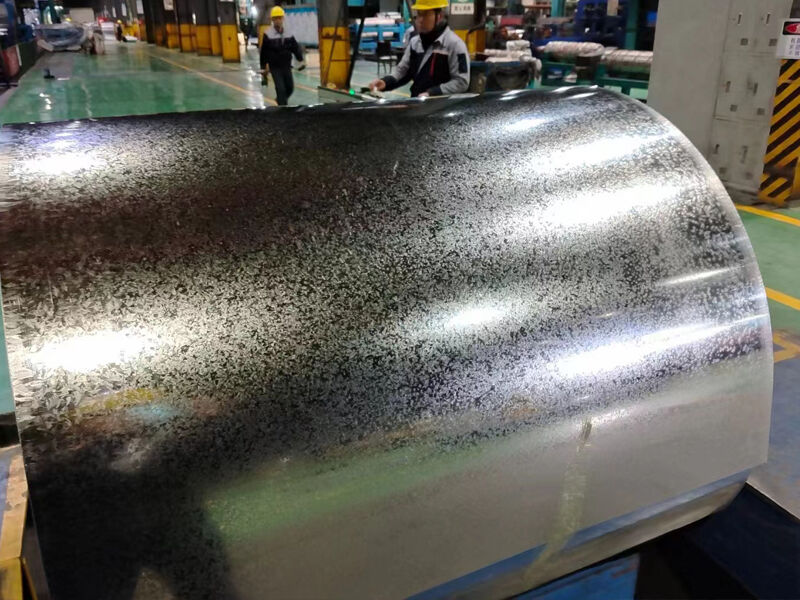
How Galvanized Coil Delivers Corrosion Protection: Sacrificial Zinc vs. Barrier-Only Alternatives
Electrochemical sacrificial protection: Why zinc corrodes preferentially to steel
Galvanized coil protects steel through electrochemical sacrificial action—zinc’s higher reactivity in the galvanic series ensures it corrodes first when exposed to moisture or other electrolytes. This cathodic protection shields the underlying steel even at cut edges or scratches, where zinc oxidizes to form a self-healing layer of zinc carbonate patina. Unlike passive barriers, this mechanism actively compensates for damage. Corrosion studies confirm this dual role—physical barrier plus electrochemical guard—extends service life by 5–8× compared to uncoated steel in moderate environments.
Comparison with passive barriers: Anodized aluminum oxide and polymer coatings (e.g., polyester in PPGI)
Anodized aluminum and polymer-coated coils like PPGI rely exclusively on physical barrier integrity. A scratch or micro-crack in anodized aluminum immediately exposes bare metal to corrosion, as its protective oxide layer offers no sacrificial capacity. Similarly, polyester-coated PPGI loses long-term protection once the resin film is compromised—creating permanent pathways for moisture and ions. While these systems excel in aesthetics and UV resistance, they lack galvanized steel’s ability to self-repair electrochemically. Industrial weathering data shows polyester coatings lose 15–20% adhesion strength after five years, accelerating degradation under mechanical or thermal stress.
Environmental limits: Reduced performance of galvanized coil in acidic, high-chloride, or polluted industrial settings
Galvanized coil’s sacrificial protection weakens significantly in aggressive environments. Acidic conditions (pH < 5) accelerate zinc dissolution three to five times faster than in neutral settings. In coastal areas, chloride-rich salt spray forms highly conductive electrolytes that overwhelm zinc’s capacity for sustained cathodic protection. Likewise, industrial pollutants such as SO₂ and NOₓ generate acidic deposits that prematurely thin the zinc layer. Accelerated corrosion testing indicates up to 50% reduction in service life under these conditions—making aluminum-zinc alloy coatings or enhanced barrier systems more suitable alternatives.
Galvanized Coil vs. Galvalume® Coil: Alloy Composition, Coating Structure, and Real-World Durability
55% Al–Zn microstructure: Combined barrier protection and limited sacrificial action
Galvalume® coil uses a precisely engineered 55% aluminum, 43.4% zinc, and 1.6% silicon alloy to deliver hybrid protection. Aluminum forms a dense, self-repairing oxide barrier that resists moisture and oxygen penetration, while dispersed zinc particles provide localized cathodic protection at exposed edges or scratches. Silicon improves coating adhesion during forming and fabrication. Though less reliant on full sacrificial action than pure galvanized coil, Galvalume® maintains 2–4× greater atmospheric corrosion resistance—largely due to aluminum’s superior barrier efficiency and slower consumption rate. Its sacrificial function does diminish in extreme pH ranges where aluminum’s passivation breaks down.
Coating weight trade-offs: G-90 (275 g/m²) vs. AZ-50 (150 g/m²) and their impact on service life by environment
Coating mass alone doesn’t determine longevity—alloy behavior and environmental exposure are equally decisive. Standard G-90 galvanized coil applies 275 g/m² of zinc; Galvalume® AZ-50 achieves comparable or better performance with just 150 g/m² of its Al-Zn-Si alloy. In inland temperate zones, AZ-50 delivers 25–30+ years of service—outperforming G-90—thanks to aluminum’s stable oxide layer. But in coastal or industrial settings, chlorides and acids penetrate aluminum-rich barriers more readily, reducing its advantage. Here, G-90’s heavier, more reactive zinc layer provides stronger edge protection and longer durability. Service life projections reflect this balance:
| Environment | Galvanized G-90 (Years) | Galvalume® AZ-50 (Years) |
|---|---|---|
| Inland Temperate | 15–20 | 25–30+ |
| Coastal/Industrial | 7–12 | 10–15 |
Selecting between them requires matching coating chemistry—not just weight—to real-world exposure conditions.
Pre-Painted Coils (PPGI/PPGL): How Topcoats Alter Galvanized and Galvalume® Base Performance
Polyester and PVDF topcoats: UV resistance, aesthetic longevity, and indirect effects on underlying corrosion pathways
Pre-painted coils combine galvanized or Galvalume® substrates with organic topcoats—most commonly polyester or polyvinylidene fluoride (PVDF)—to enhance appearance and extend service life. PVDF topcoats offer exceptional UV stability, retaining color and gloss for 20–30 years in direct sunlight, whereas standard polyester typically fades or chalks within 10–15 years. Both act as impermeable barriers, but PVDF’s superior chemical and thermal resilience reduces micro-cracking during thermal cycling and weathering—delaying electrolyte access to the metallic substrate. Critically, this delays activation of the base layer’s corrosion protection mechanisms: for galvanized coil, it postpones reliance on zinc’s sacrificial action; for Galvalume®, it preserves aluminum’s oxide barrier longer. As a result, PVDF-coated systems show measurably improved durability in harsh environments—including coastal and industrial zones—where moisture and pollutants would otherwise accelerate substrate degradation.
Performance Comparison:
| Property | Polyester Topcoat | PVDF Topcoat |
|---|---|---|
| UV Resistance | Moderate (10–15 years) | High (20–30 years) |
| Color Retention | Prone to fading/chalking | Exceptional retention |
| Moisture Barrier | Moderate sealing capability | Superior impermeability |
| Crack Propagation | Higher risk in thermal cycles | Reduced micro-cracking |
Frequently Asked Questions
What is the main advantage of zinc in galvanized coils?
Zinc in galvanized coils provides electrochemical sacrificial protection, meaning it corrodes before the underlying steel, which helps shield the steel and extend its service life.
How does Galvalume® differ from traditional galvanized coil?
Galvalume® uses a combination of aluminum, zinc, and silicon for protection. While it relies less on sacrificial action, it offers greater barrier efficiency due to its aluminum content, providing better durability in certain environments.
In what environments should I choose aluminum-zinc alloy coatings over galvanized?
Aluminum-zinc alloy coatings are better suited for aggressive environments with high acidity or chloride exposure where traditional galvanizing might not provide sufficient protection.
Table of Contents
-
How Galvanized Coil Delivers Corrosion Protection: Sacrificial Zinc vs. Barrier-Only Alternatives
- Electrochemical sacrificial protection: Why zinc corrodes preferentially to steel
- Comparison with passive barriers: Anodized aluminum oxide and polymer coatings (e.g., polyester in PPGI)
- Environmental limits: Reduced performance of galvanized coil in acidic, high-chloride, or polluted industrial settings
- Galvanized Coil vs. Galvalume® Coil: Alloy Composition, Coating Structure, and Real-World Durability
- Pre-Painted Coils (PPGI/PPGL): How Topcoats Alter Galvanized and Galvalume® Base Performance
- Frequently Asked Questions