EN
EN



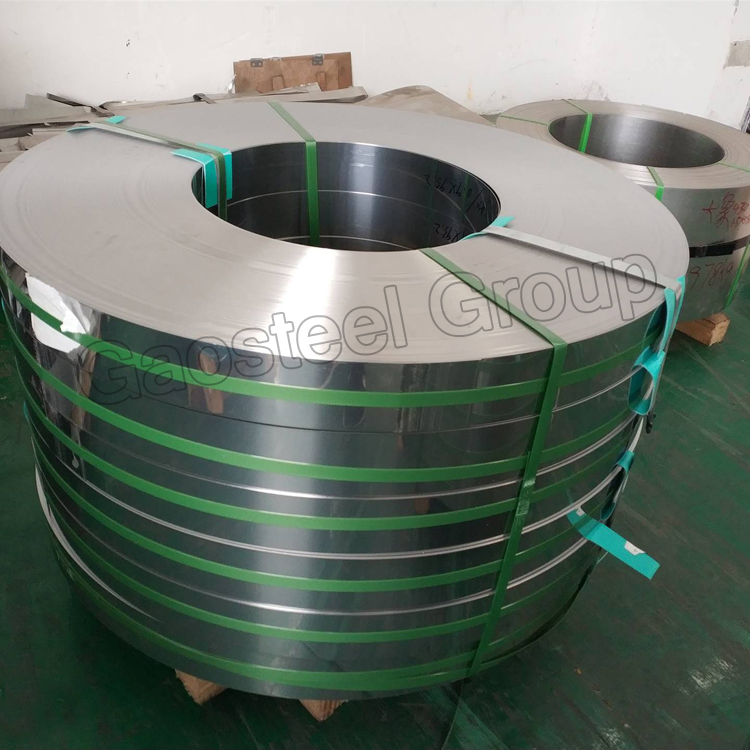
Match Carbon Steel Coil Thickness to End-Use Application Requirements
Selecting the optimal carbon steel coil thickness directly impacts product performance, safety, and manufacturing efficiency. Industry-specific requirements dictate precise thickness ranges to balance structural integrity with material economy.
Thickness Ranges for Automotive, Construction, and Appliance Manufacturing
Car panels generally work with steel coils between 0.6 to 2 mm thick to maintain light weight yet still hold their shape. Construction projects need much heavier stuff though, often going for sections from 4 all the way up to 25 mm for structural strength. When it comes to appliances like refrigerators or washing machines, manufacturers tend to go with thinner materials ranging from 0.4 to 1.2 mm because they bend easier and resist rust better. Of course there's a trade off here too. Going too thin saves money on materials but makes things more prone to dents. Some research indicates that cutting automotive steel thickness by just 0.3 mm can actually raise the chance of dents forming by about 18% when hit with normal impacts during everyday driving conditions.
Process-Specific Constraints: Stamping, Pipe Forming, and Deep Drawing
Stamping operations require 1.5 mm thickness to prevent cracking during high-pressure forming, whereas pipe fabrication tolerates 3–12 mm coils for weld integrity. Deep drawing processes demand ultra-uniform thickness (tolerance ±0.05 mm) to avoid fractures in complex geometries. Exceeding thickness thresholds strains equipment—forming 3 mm coils requires 40% more press tonnage than 2 mm equivalents.
Evaluate Mechanical Performance: Strength, Stiffness, and Flatness Trade-offs
Yield Strength, Section Modulus, and Bending Load Capacity
The yield strength basically tells us when carbon steel coil starts to deform permanently under stress, which matters a lot for parts that need to stay dimensionally stable even when loaded. Take ASTM A1011 coils as an example. Those rated at 50 ksi can handle much more bending force before they start to give way compared to their 30 ksi counterparts. Then there's the section modulus factor too, which depends heavily on how thick the material is. A coil that's 0.125 inches thick will be about 70% stiffer in bending than one only 0.100 inches thick. These two properties work together to determine how much weight something can actually hold up. Go beyond the yield strength and things might just fail completely. Not enough stiffness though, and we end up with parts that bend too much under normal loads.
Residual Stress Effects on Flatness—and Why Thicker Isn’t Always Stiffer
Uneven cooling or rolling creates residual stresses that actually mess with flatness in thick coils too. A recent study from 2025 showed something interesting: coils thicker than 0.25 inches have around 40 percent more cross bow distortion compared to thinner ones when those residual stresses get over 15% of what the material can handle before yielding. What happens here is pretty straightforward but important. When we cut these coils through processes like slitting or blanking, the built up internal stresses start moving around again, which basically cancels out any benefits the extra thickness might normally provide. If manufacturers need their coils to stay within plus or minus 3 mm per meter flatness tolerance, they really need to do stress relief leveling work on materials where the tensile strength goes beyond 80 ksi. This makes all the difference in getting consistent results.
Optimize Carbon Steel Coil Thickness for Processing Equipment and Quality Control
Thickness–Yield Strength Interactions Causing Coil Set and Crossbow Defects
When carbon steel coils get thicker and stronger at the same time, the residual stresses inside them actually get worse, which leads to all sorts of shape problems that mess up manufacturing accuracy. Take coils over 0.25 inches thick with yield strengths above 80 ksi for instance. These create about 30 to 40 percent more internal stress during coiling compared to their thinner counterparts. What happens? We see significant coil set, where the coil curves along its length, and crossbow effects, where it arches across the width. The real trouble starts when those built-up stresses push past what the material can handle elastically, especially with high strength low alloy (HSLA) steels. A good case is coils thicker than 0.3 inches with around 100 ksi strength. They tend to bow out by as much as 0.15 inches every foot. That kind of deviation causes all sorts of problems downstream, from jamming stamping machines to making parts that don't fit right after roll forming. To fix this mess, manufacturers typically turn to stress relief annealing or need to tighten up how they control tension while coiling the material.
Straightener and Leveler Setup Guidelines by Carbon Steel Coil Thickness and Strength
Optimizing straightening equipment demands calibrated adjustments to coil thickness–yield strength profiles. Use this framework:
| Thickness Range | Yield Strength | Roll Penetration | Backup Roll Requirement |
|---|---|---|---|
| < 0.1 inch | < 50 ksi | Moderate | Unnecessary |
| 0.1–0.25 inch | 50–80 ksi | High | Partial |
| > 0.25 inch | > 80 ksi | Aggressive | Full |
When dealing with thin, low strength coils measuring under 0.1 inch at around 50 ksi, it's best practice to keep leveling operations to about 5 to 7 passes with gap settings between 90 and 95 percent of thickness. This helps avoid damaging the material through excessive working. For thicker materials like those over 0.25 inch with strength ratings above 80 ksi, manufacturers typically need between 9 and 11 passes at lower gap settings (around 85-90%) while incorporating hydraulic backup systems to manage springback issues effectively. Line speed becomes particularly important when handling coils thicker than 0.3 inches. Operators should generally slow production down to under 50 feet per minute to allow stresses to distribute evenly throughout the material. Maintaining this controlled approach is essential if we want to achieve flatness tolerances within plus or minus 0.01 inch per foot across the finished product.
Align Carbon Steel Coil Thickness with Grade-Specific Workability Limits
The amount of carbon present plays a big role in how easy it is to work with different steel coil thicknesses. For low carbon steel, anything at or below 0.3% carbon works best in thin sheets ranging from about 0.7 to 1.5 millimeters thick. These are commonly used for making those deep drawn parts found on car bodies. Medium carbon steel, which falls between 0.31% and 0.6% carbon content, needs thicker material around 1.6 to 3 millimeters to stop cracks from forming when bent, especially important in processes like creating gear blanks. Then there's high carbon steel with over 0.6% carbon content. These materials really struggle with workability because they tend to be brittle. Special care must be taken with these steels if they're going to be formed into pipes or similar shapes, particularly when working with coils under 5 mm thickness where micro cracks can develop easily.
| Carbon Grade | Properties | Formability Limits | Typical Thickness Range |
|---|---|---|---|
| Low-carbon steel | High ductility, excellent elongation | Minimal springback in deep drawing | 0.4–2.0 mm |
| Medium-carbon | Balanced strength/formability | Moderate roll-forming compatibility | 1.2–6.0 mm |
| High-carbon | Extreme hardness, low fracture toughness | Brittle fracture risk in thin sections | ≥3.0 mm (critical) |
The relationship between yield strength and workability works kind of backward steel coils rated at over 550 MPa tensile strength tend to crack along edges when stamped below 1.2 mm thickness no matter how much pressure is applied during stamping. Smart manufacturers run those ASTM E290 bend tests first thing to figure out what minimum bend radius will actually work before locking in any coil thickness specs, especially important stuff that gets put into structural parts subjected to moving forces all day long. Getting this right from the start saves tons of money down the road on fixing mistakes later, plus keeps everything dimensionally accurate throughout the whole manufacturing process chain.
FAQ Section
What determines the optimal thickness of carbon steel coils?
The optimal thickness of carbon steel coils is determined by the specific end-use application, as different industries like automotive, construction, and appliance manufacturing have unique requirements for structural integrity, performance, and cost-effectiveness.
How does carbon content affect the workability of steel coils?
Carbon content affects workability by determining thickness limits for shaping processes. Low-carbon steel is suitable for thin sheets, medium-carbon requires thicker materials, while high-carbon steel is more brittle, demanding careful handling in forming processes.
Why are residual stresses a concern for thicker steel coils?
Residual stresses can cause shape problems like crossbow distortion and affect the flatness of thicker coils, leading to manufacturing defects if not managed properly through stress relief and leveling processes.
How can manufacturers control flatness and shape issues in high-strength steel coils?
Manufacturers can control flatness and shape issues by using techniques such as stress relief annealing, carefully calibrating straighteners and levelers, and managing coiling tension and line speed during production.
Table of Contents
- Match Carbon Steel Coil Thickness to End-Use Application Requirements
- Evaluate Mechanical Performance: Strength, Stiffness, and Flatness Trade-offs
- Optimize Carbon Steel Coil Thickness for Processing Equipment and Quality Control
- Align Carbon Steel Coil Thickness with Grade-Specific Workability Limits