EN
EN



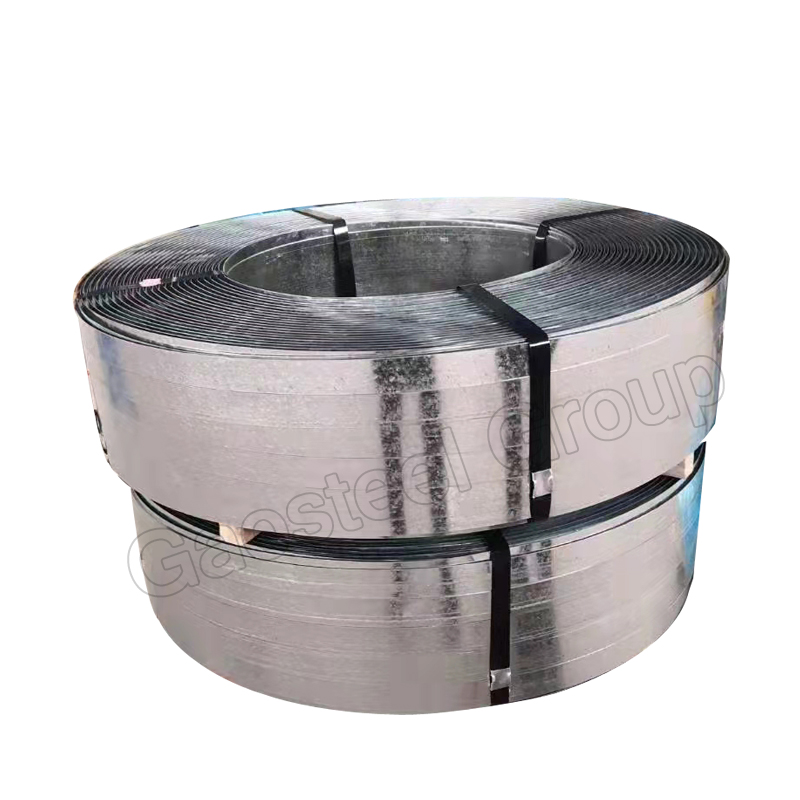
What Tensile Strength Really Means for Black Painted Steel Strapping
Defining Tensile Strength in Context: Yield vs. Ultimate, and Why It’s Not Just About Breaking Load
Tensile strength measures a material’s resistance to pulling forces—but for black painted steel strapping, performance hinges on two distinct mechanical thresholds:
- Yield strength: The stress at which permanent deformation begins. Exceeding this causes irreversible stretching, compromising clamping force over time.
- Ultimate tensile strength (UTS): The maximum stress the strap can withstand before fracture.
| Property | Practical Impact on Black Painted Strapping | Failure Risk If Ignored |
|---|---|---|
| Yield Strength | Prevents plastic deformation during tensioning | Strapping loosens under vibration |
| Ultimate Strength | Determines absolute break point under overload | Catastrophic snap during shock loading |
Focusing solely on UTS overlooks critical yield behavior—strapping may “hold” briefly but deform silently, eroding long-term security. Real-world reliability depends on maintaining load retention before reaching the breaking point.
How the Black Paint Coating Affects Stress Distribution and Measured Strength Values
The polymer coating introduces micro-thickness variations that alter stress flow during tensioning:
- Paint accumulates at edges, creating localized hardness zones—up to 15% stiffer than the base steel.
- This unevenness concentrates stress at coating seams and cut edges, accelerating micro-crack initiation.
- Lab tests often use pristine specimens, yet real-world handling—scratches from guides or rollers—reduces effective strength by 9–12% versus idealized samples (ASTM D3953 highlights this validation gap).
Thus, specifying tensile strength requires contextual adjustments for coating-induced brittleness—not just raw steel properties.
Matching Tensile Strength to Application Demands for Black Painted Steel Strapping
High-Risk Applications Requiring Higher Tensile Strength (e.g., Railcar Securing, Heavy Machinery Palletizing)
When it comes to securing really important loads such as railcars or stacking heavy machinery on pallets, black painted steel strapping needs to handle tensile strengths over 130,000 psi just to be safe enough. These situations are serious business because there are all sorts of forces at play. During rail switching operations, shock loads can actually hit around 70% of what the strap is rated for. According to industry reports from the Logistics Safety Review back in 2023, about one out of every four load shift problems happens simply because someone used inferior quality strapping for transporting heavy equipment. That black coating matters a lot too. It helps protect against rust when we're talking about things like 20-ton CNC machines or big construction excavators being shipped across different modes of transport. Moisture gets everywhere during these journeys, so without proper protection, the metal weakens over time. Most engineers focus on something called yield strength, which usually sits somewhere between 80% and 85% of those maximum tensile numbers. This ensures that whatever holds everything together maintains its grip even when faced with unexpected stops or slowdowns. The goal here is keeping catastrophic failures down to less than 0.1% based on real world testing.
Lower-Tensile Scenarios Where Ductility and Impact Resistance Matter More Than Max Break Strength
For bundling lightweight auto parts or securing retail items, black painted steel strapping rated at around 90,000 to 110,000 psi actually works better than those super strong alternatives. The key advantage lies in its ability to stretch up to 15%, which helps absorb those inevitable forklift bumps without snapping like glass. A recent packaging report from 2022 found warehouses saw about 27% less damage when using this type of flexible strapping. What makes this work so well is that the paint layer stays pliable through all those tightening cycles, preventing tiny cracks from forming. That's why it's great for things like appliances being shipped around, where vibrations are constant companions. When packages get handled repeatedly, impact resistance matters more than sheer strength. Good strapping should bend rather than break when hit suddenly, and this particular steel achieves that thanks to how its crystal structure interacts with the elastic coating.
Avoiding Common Selection Pitfalls with Black Painted Steel Strapping
Overlooking Coating-Induced Stress Concentrations and Edge Embrittlement During Tensioning
Black paint coatings tend to form stress points when the material is stretched tight. The polymer layer behaves differently from plain steel because it stretches and compresses in its own way, leading to stress that isn't spread evenly over the whole strap surface area. These problems get worse at the cut edges where the paint doesn't stick as well, basically becoming starting points for tiny fractures. When subjected to repeated stretching and relaxing motions, especially in colder weather conditions where paint becomes stiffer (losing around 40% of its normal flexibility), these stress areas speed up the metal's breakdown process. Practical tests have found that straps with damaged edges often break at only 80-85% of what they should be able to handle when exposed to regular vibrations. Before putting any load on these materials, take time to check those edge coatings carefully. Even small hairline cracks can grow quickly once weight starts being applied.
Misinterpreting ASTM D3953/ISO 11338 Test Data Without Accounting for Real-World Handling Variables
Standardized lab tests like ASTM D3953 and ISO 11338 measure tensile strength under controlled conditions—but they overlook critical field variables:
- Impact damage: Forklift collisions reduce effective strength by 25–30% versus pristine lab samples
- Environmental exposure: Salt spray degrades coating adhesion three times faster than accelerated aging tests predict
- Tensioning variations: Hand-tool over-torque creates localized stress exceeding test parameters
| Test Limitation | Real-World Variance Factor | Strength Impact |
|---|---|---|
| Controlled temperature | Thermal cycling (-40°C to 60°C) | ±12% modulus shift |
| Idealized clamping | Improper tool jaw alignment | 20% stress concentration |
| Unblemished specimens | Surface scratches/dents | 35% fatigue life reduction |
Cross-reference certification data with actual handling conditions—particularly for dynamic load applications like shipping containers. Field validation remains essential, since lab results often overestimate in-service performance by 18–22% for black painted steel strapping.
FAQ
What is tensile strength and why is it important for steel strapping?
Tensile strength measures a material's resistance to pulling forces. For steel strapping, it determines the material’s ability to hold loads securely without breaking.
What is the difference between yield strength and ultimate tensile strength?
Yield strength is the stress level where permanent deformation starts, while ultimate tensile strength is the maximum stress the material can handle before breaking.
Why is black painted steel strapping preferred?
Black painted steel strapping provides enhanced protection against rust, which is crucial for securing heavy machinery and railcars exposed to moisture.
What are common pitfalls in selecting black painted steel strapping?
Common pitfalls include overlooking stress concentrations due to coating irregularities, and misinterpreting standard test data that doesn’t account for real-world handling variables.