EN
EN



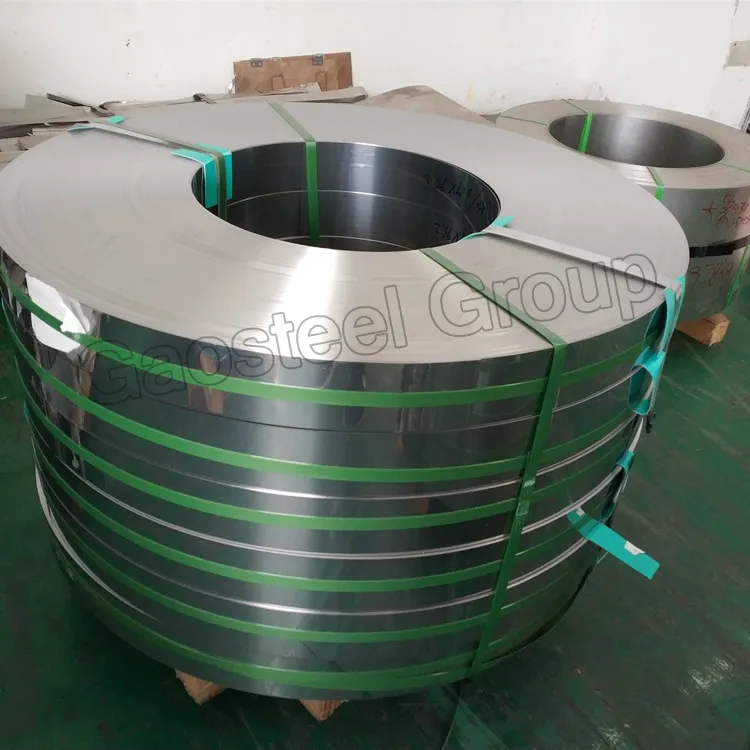
Corrosion Resistance: When 304 Stainless Steel Strip Meets Real-World Electronics Environments
Molybdenum’s Absence in 304 vs. Its Role in 316’s Chloride Resistance
The key metallurgical distinction between 304 and 316 stainless steel strip is molybdenum: grade 316 contains 2–3% molybdenum, which significantly enhances resistance to chloride-induced pitting and crevice corrosion by stabilizing the passive chromium oxide layer. In high-chloride environments—such as coastal atmospheres or chemical processing sites—316 clearly outperforms 304. By contrast, 304 lacks molybdenum and offers only moderate chloride resistance. While this makes it unsuitable for marine electronics or saline-exposed medical devices, most consumer electronics operate indoors with negligible chloride exposure. Within sealed or semi-sealed enclosures, the risk of chloride-driven pitting is minimal. For smartphones, wearables, and laptops that never encounter salt spray or immersion, 304’s self-repairing chromium oxide layer provides robust, long-term protection—making over-specification with 316 unnecessary in many cases.
Humidity, Sweat, and Trace Salts: Why 304 Stainless Steel Strip Often Performs Adequately in Consumer Electronics
Consumer electronics typically function in controlled indoor settings where humidity rarely exceeds condensation thresholds, and human contact introduces only brief, localized exposure to sweat and trace salts. Under these conditions, 304 stainless steel strip maintains a stable passive layer and resists oxidation and staining across its typical 2–5 year service life. Research indicates that 304 remains corrosion-free at up to 50% relative humidity at room temperature; degradation becomes notable only above 90% RH or when combined with aggressive contaminants. Additional safeguards—such as conformal coatings, gaskets, and enclosure seals—further limit environmental stress on metal components. As a result, 304 delivers an optimal balance of cost, manufacturability, and functional reliability for mainstream electronics. While design validation should still account for worst-case sweat pH and prolonged humidity, real-world performance data confirms that 304 meets corrosion resistance requirements for the vast majority of consumer applications.
Mechanical Performance and Formability of Stainless Steel Strip in Precision Electronics Manufacturing
Bendability, Springback, and Edge Integrity in Thin-Gauge Stainless Steel Strip Stamping
In precision electronics manufacturing, stainless steel strip must endure tight bends, deep draws, and high-speed stamping without cracking or excessive burring. Grade 304 excels here due to its lower work-hardening rate and reduced flow stress—traits linked to the absence of molybdenum. This allows it to form sharp radii common in EMI shields, connectors, and shielding cans while maintaining consistent edge integrity. Compared to 316, 304 exhibits more predictable springback behavior, especially in thin gauges (<0.5 mm), enabling tighter dimensional control and fewer assembly rejections. Although 316 matches 304 in ductility, its higher yield strength increases springback—requiring over-bending compensation in tooling and raising scrap rates. For progressive die stamping of enclosures, brackets, and internal frames, 304’s forgiving formability reduces setup complexity and improves first-pass yield.
Yield Strength and Elongation Trade-Offs Affecting Enclosure Durability and Assembly Yield
Yield strength and elongation directly influence how an enclosure responds to mechanical stress during assembly and field use. Grade 304 offers a yield strength of 205–310 MPa and elongation of 40–50%, delivering sufficient rigidity to protect PCBs while accommodating snap-fit insertion forces without fracturing. Grade 316 raises yield strength to 290–345 MPa but reduces elongation to 35–45%. That narrower ductility window increases susceptibility to cracking—particularly at thin cross-sections and stress-concentrated features like clip engagement points. In practice, enclosures made from 304 achieve higher assembly yields because the material yields elastically rather than failing catastrophically under load. Its superior drawability also supports deeper forming operations critical for battery housings and sensor covers. For mass-produced electronics, 304 strikes a proven balance: durable enough for end-user handling, yet forgiving enough to sustain high-volume, low-defect manufacturing.
Cost, Supply Chain, and BOM Impact of Choosing 304 vs. 316 Stainless Steel Strip
Material selection directly affects bill-of-materials (BOM) cost, procurement lead times, and time-to-market. 316 stainless steel strip typically costs 40% to 75% more than 304—driven by higher nickel content and the addition of molybdenum. In high-volume consumer electronics, this premium can add tens of thousands of dollars annually to production costs. Meanwhile, 304 is widely stocked by global distributors, supporting shorter lead times and simplified sourcing. In contrast, thin-gauge 316—especially in specialty tempers or surface finishes—often requires mill-direct orders, increasing procurement risk and potential delays.
From a total cost of ownership perspective, however, the decision extends beyond upfront material price. Superior corrosion resistance may justify 316’s premium in harsh-use scenarios—reducing warranty claims, field failures, and brand-damaging recalls. But for devices operating in benign indoor environments, the added cost delivers no measurable reliability benefit. Engineering judgment must therefore weigh actual environmental exposure against cost, supply chain resilience, and manufacturability. For cost-sensitive, high-volume designs where corrosion risk is low, 304 remains the pragmatic, performance-validated choice.
Functional Reliability Beyond Corrosion: EMI Shielding, Solderability, and Surface Finish Considerations for Stainless Steel Strip
Beyond corrosion resistance, stainless steel strip must support electromagnetic interference (EMI) shielding effectiveness, reliable solder joint formation, and stable surface finish—all critical to signal integrity and assembly yield. A smooth, contaminant-free surface enhances reflectivity and absorption of interfering frequencies, while proper cleaning and activation improve solder wetting and intermetallic bond strength.
Passive Film Stability Under Low-Voltage Conditions and Risk of Galvanic Coupling with PCB Traces
The chromium oxide passive film on stainless steel remains electrochemically stable under the low-voltage, low-current conditions typical of consumer electronics—providing consistent insulation and surface integrity. However, direct contact between stainless steel and copper PCB traces—especially in the presence of an electrolyte such as residual flux, humidity, or ionic contamination—can establish a galvanic couple. Because stainless steel is more noble (cathodic) than copper, the copper becomes the anode and may corrode preferentially over time. This localized galvanic corrosion can degrade trace conductivity, leading to intermittent failures or increased impedance. Designers should therefore assess contact geometry, environmental sealing, and potential electrolyte pathways—and consider insulating barriers, selective plating, or isolation gaps to mitigate risk.
FAQ Section
What is the main difference between 304 and 316 stainless steel strips?
The primary difference lies in the molybdenum content. 316 contains 2–3% molybdenum, which enhances resistance to chloride-induced corrosion, whereas 304 lacks molybdenum.
Is 304 stainless steel suitable for consumer electronics?
Yes, 304 performs adequately in most consumer electronics, especially those used indoors with minimal exposure to corrosive environments.
Why is 304 more cost-effective than 316?
304 costs less due to the absence of molybdenum and lower nickel content, making it more affordable for large-scale manufacturing.
What environmental factors affect 304’s corrosion resistance?
Humidity levels above 90%, aggressive contaminants, and prolonged exposure to sweat or trace salts can impact 304’s corrosion performance.
Does galvanic coupling occur between stainless steel and copper PCB traces?
Yes, if an electrolyte is present, galvanic coupling may cause localized corrosion of the copper traces due to their anodic nature.
Table of Contents
- Corrosion Resistance: When 304 Stainless Steel Strip Meets Real-World Electronics Environments
- Mechanical Performance and Formability of Stainless Steel Strip in Precision Electronics Manufacturing
- Cost, Supply Chain, and BOM Impact of Choosing 304 vs. 316 Stainless Steel Strip
- Functional Reliability Beyond Corrosion: EMI Shielding, Solderability, and Surface Finish Considerations for Stainless Steel Strip
-
FAQ Section
- What is the main difference between 304 and 316 stainless steel strips?
- Is 304 stainless steel suitable for consumer electronics?
- Why is 304 more cost-effective than 316?
- What environmental factors affect 304’s corrosion resistance?
- Does galvanic coupling occur between stainless steel and copper PCB traces?