EN
EN



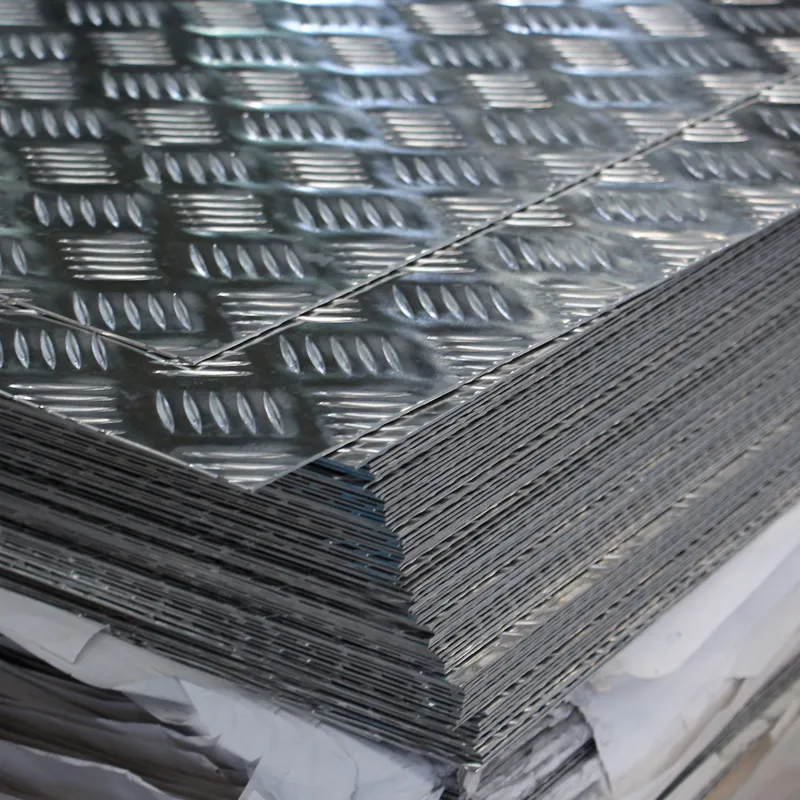
Superior Structural Performance of MS Plate for Bridge Load Requirements
High Strength-to-Weight Ratio and Reliable Load-Bearing Capacity for Short- to Medium-Span Bridges
MS plate delivers a high strength-to-weight ratio ideal for short- to medium-span bridges (typically under 120 meters). Its inherent strength enables lighter superstructures without sacrificing load-bearing capacity. In compressive concrete systems, MS plate can reduce overall weight by up to 40%, lowering foundation loads and simplifying substructure design—improving constructability while cutting transportation and erection costs. For steel-dominant spans, MS plate provides consistent yield strength: 250 MPa for IS 2062 or 250–300 MPa for ASTM A36—ensuring reliable performance under traffic, pedestrian, and light rail design loads. Uniform thickness and predictable mechanical properties streamline structural calculations and support precise, code-compliant detailing.
Fatigue Resistance and Long-Term Integrity Under Cyclic Traffic and Environmental Loads
Bridges endure millions of load cycles from vehicles, wind, and thermal expansion over their service life. MS plate’s ductility and stress-redistribution capability provide strong fatigue resistance. When detailed with welded connections and stiffeners, MS plate structures effectively manage cyclic stresses, minimizing crack initiation and propagation. Its consistent grain structure and low carbon content reduce internal defects that could trigger early fatigue failure. Stable mechanical behavior across wide temperature ranges ensures dependable performance in extreme heat and cold. Real-world projects confirm MS plate girders routinely exceed 75 years of service with only routine inspections—provided fatigue-sensitive details are addressed during design. This proven long-term integrity makes MS plate a trusted choice for owners prioritizing lifecycle durability.
Fabrication Efficiency and Construction Acceleration Enabled by MS Plate
Weldability, Formability, and Field-Adaptability of ASTM A36 and IS 2062 MS Plate
ASTM A36 and IS 2062 MS plates offer exceptional weldability and formability—key enablers of modern bridge fabrication. Their predictable behavior under welding and bending allows standard industrial tools to cut, shape, and join components efficiently, reducing reliance on specialized equipment. This ease of manipulation lowers labor costs and accelerates production. Field adaptability supports on-site modifications without compromising structural integrity—a critical advantage when unforeseen site conditions arise. Ductility permits complex geometries—including curved girders and stiffened panels—without cracking. Approximately 60% of prefabricated bridge components (trusses, columns, bearing plates) rely on these grades. Proven welding methods like shielded metal arc and submerged arc welding ensure consistent joint quality. The synergy of reliable mechanical properties and straightforward fabrication solidifies ASTM A36 and IS 2062 as the preferred choices for short- to medium-span bridges.
Prefabrication Advantages: Reduced On-Site Work, Schedule Certainty, and Quality Control
Prefabricating MS plate components shifts complexity from the field to controlled factory environments. Pre-cutting, welding, and assembling modules off-site drastically reduces on-site fabrication tasks. For spans under 120 meters, this approach cuts construction timelines by 20–30%, transforming final assembly into efficient bolting or welding operations. Schedule certainty improves significantly—weather delays and labor shortages exert less influence on project milestones. Factory settings also enable rigorous quality control: dimensional checks, weld inspections, and coating applications occur under standardized conditions, catching errors early and minimizing rework and material waste. Reduced on-site activity lowers safety risks and limits disruption to traffic or adjacent infrastructure. These benefits make MS plate a cost-effective solution that delivers both speed and reliability in contemporary bridge delivery.
Cost-Effective Lifecycle Value of MS Plate Compared to Alternative Bridge Materials
Lower Initial Cost and Predictable Maintenance Costs for Bridges Under 120 m Span
Mild Steel (MS) plate delivers outstanding lifecycle value for short- to medium-span bridges (under 120 meters). Independent research confirms MS plate reduces initial construction costs by 20–30% compared to reinforced concrete or stainless steel alternatives while meeting required performance benchmarks [Yi et al., 2022]. This advantage stems from MS’s superior strength-to-cost ratio, which optimizes expenditures on foundations and substructures. Construction planners consistently report predictable, decades-long maintenance schedules for MS plate bridges within this span range—especially when weathering steel variants like ASTM A588 are used to extend intervention intervals. The combination of affordability and manageable upkeep makes MS plate ideal for infrastructure projects operating under constrained budgets—without compromising durability thresholds established by engineering standards such as IRC:SP:47 or AASHTO LRFD.
Corrosion Resilience and Service-Life Extension Strategies for MS Plate Bridges
Galvanizing, Weathering Steel Variants (e.g., ASTM A588), and Multi-Layer Coating Systems
Corrosion protection is essential to achieving multi-decade service life for MS plate bridges. Hot-dip galvanizing applies a sacrificial zinc coating that resists rust—even at scratched or cut edges. Weathering steel grades like ASTM A588 develop a stable, self-healing patina when exposed to atmospheric moisture and oxygen, eliminating the need for paint in many inland environments. Multi-layer coating systems—typically epoxy primers paired with polyurethane topcoats—provide robust barriers against moisture and chloride ingress. While upfront investment varies by method, all three strategies significantly reduce long-term maintenance frequency. In aggressive environments—such as coastal zones or areas subject to de-icing salts—combining galvanizing with a compatible topcoat delivers the highest level of protection. With proper specification and detailing, these treatments enable MS plate bridges to achieve service lives exceeding 75 years with only periodic inspections.
FAQ
What is the ideal span range for bridges using MS plate?
MS plate is best suited for short- to medium-span bridges, typically up to 120 meters.
How does MS plate improve the fabricability of bridge components?
Its exceptional weldability and formability allow for efficient cutting, shaping, and joining using standard industrial tools, reducing production time and labor costs.
What corrosion protection options are available for MS plate bridges?
Options include hot-dip galvanizing, using weathering steel variants like ASTM A588, and applying multi-layer coating systems such as epoxy primers and polyurethane topcoats.
What kind of maintenance schedule is typical for MS plate bridges?
When properly detailed, MS plate bridges can achieve service lives exceeding 75 years with only periodic inspections.
How does prefabricated MS plate enhance construction efficiency?
Prefabricating components shifts complex tasks to factory environments, shortening construction timelines by 20–30% and providing schedule certainty while improving quality control.
Table of Contents
- Superior Structural Performance of MS Plate for Bridge Load Requirements
- Fabrication Efficiency and Construction Acceleration Enabled by MS Plate
- Cost-Effective Lifecycle Value of MS Plate Compared to Alternative Bridge Materials
- Corrosion Resilience and Service-Life Extension Strategies for MS Plate Bridges
-
FAQ
- What is the ideal span range for bridges using MS plate?
- How does MS plate improve the fabricability of bridge components?
- What corrosion protection options are available for MS plate bridges?
- What kind of maintenance schedule is typical for MS plate bridges?
- How does prefabricated MS plate enhance construction efficiency?