EN
EN



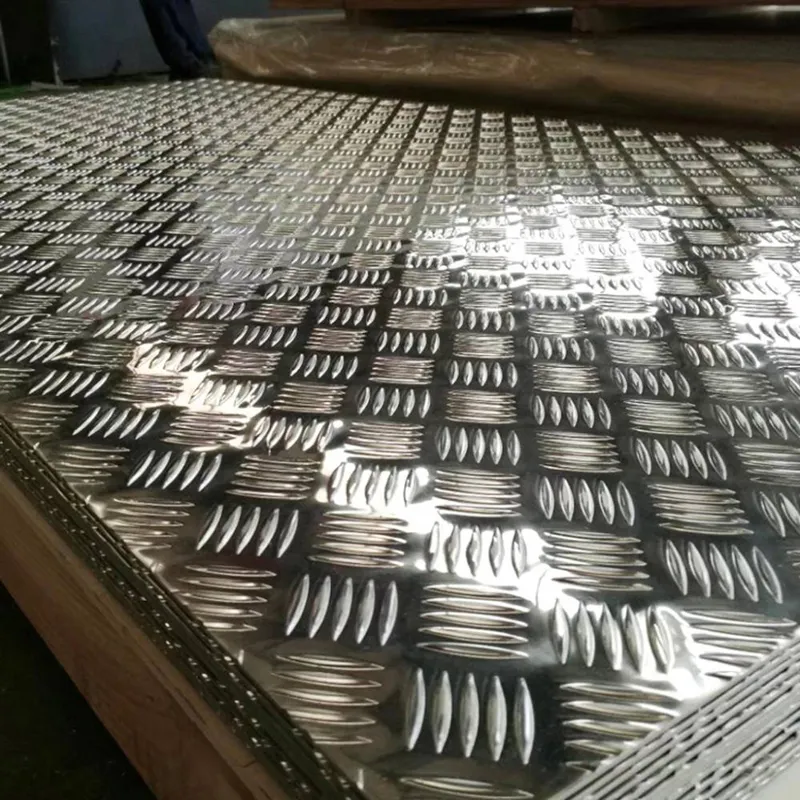
Material Inconsistency and Yield Loss in Steel Equipment Processing
Alloy Segregation and Billet Variability Impacting Forging Uniformity
Alloy segregation during casting creates chemical gradients within a single billet—leading to uneven hardness, ductility, and flow behavior under pressure. When such a billet enters the forging press, softer zones deform excessively while harder regions resist plastic flow, resulting in inconsistent cross-sectional properties and unpredictable die fill. This variability often goes undetected until final inspection, contributing significantly to scrap rates and production delays. Further compounding the issue is heat-to-heat variability: billets from different melts may exhibit divergent metallurgical responses, forcing frequent recalibration of forging parameters.
Rigorous incoming material inspection—combined with predictive thermal-mechanical modeling—can flag high-risk billets before processing. Upstream interventions like electromagnetic stirring during solidification and controlled homogenization annealing improve compositional uniformity and reduce yield loss. As noted by the American Iron and Steel Institute (AISI), these practices are essential for achieving repeatable microstructure and mechanical performance in large-section forgings used in structural and power-generation equipment.
Tolerance Stacking Effects in Large‑Section Components
Large-section steel components—such as turbine shafts, structural frames, and pressure vessel flanges—typically undergo multiple machining operations, each introducing small but cumulative deviations. Even minor errors in roughing or finishing can cascade through subsequent setups, especially when aligning critical features like bolt holes, bearing seats, or mating surfaces across meter-long spans. A deviation of ±0.1 mm per operation may exceed total allowable tolerance (e.g., ±0.3 mm) after just three steps—rendering assemblies non-functional.
Designers sometimes specify tight geometric tolerances without modeling how process-induced variation accumulates across the manufacturing chain. The result is excessive rework, premature tool wear, and schedule slippage. Mitigation begins with early stack-up analysis using GD&T-aware software tools and continues with robust fixture design that references stable datums regardless of stock condition. Integrating statistical process control (SPC) and in-process probing allows shops to detect drift before it propagates—reducing last-minute corrections and improving first-pass yield.
Dimensional Instability During Large-Scale Steel Equipment Machining
Thermal and Residual Stress-Induced Warping in Multi-Axis Milling
Multi-axis milling of large steel parts generates localized heat buildup due to high material removal rates and interrupted cutting. Surface layers expand rapidly while the bulk remains thermally inert, creating steep thermal gradients that lock in compressive residual stresses. Upon cooling, stress redistribution causes measurable warping—often several millimeters over two-meter lengths—especially in deep-pocket or thin-web geometries common in equipment housings and frames.
This effect is magnified by asymmetric tool paths and inadequate coolant delivery, which exacerbate thermal asymmetry. Strategic countermeasures include alternating roughing passes with dwell periods to allow partial stress relaxation, using balanced tool path sequencing, and applying high-pressure coolant precisely at the shear zone. According to NIST’s Manufacturing Engineering Laboratory, implementing these thermal management techniques reduces post-machining distortion by up to 40% in heavy-section components where final tolerances fall below 50 microns.
Fixture Design Limitations for Heavy-Section Workpieces
Standard clamping systems frequently fail to stabilize massive steel workpieces—particularly those weighing hundreds to thousands of kilograms. Gravity-induced deflection at unsupported overhangs shifts the part relative to the spindle axis, compromising dimensional accuracy. Vibration from interrupted cuts further degrades grip integrity, causing positional drift and chatter marks that necessitate re-inspection and re-clamping.
Effective fixtures for heavy-section parts must distribute clamping force broadly to prevent local yielding, accommodate thermal expansion, and maintain accessibility for multi-sided machining. Hydraulic or wedge-based systems with redundant contact points enhance rigidity—but only when integrated with precision-ground base plates and verified datum referencing. Without such engineering rigor, even high-end CNC machines operate below capability, undermining efforts to hold tight positional tolerances on complex equipment components.
Human and Operational Constraints in Steel Equipment Processing
Despite advances in automation, people remain central to quality, safety, and throughput in steel equipment processing. Two persistent challenges—CNC programming errors and workforce readiness gaps—directly impact scrap rates, lead times, and operational resilience.
CNC Programming Errors and Setup Validation Gaps
Precision CNC programming is foundational to machining large steel components—yet a single misplaced coordinate, incorrect tool offset, or misapplied work coordinate system can scrap a part worth tens of thousands of dollars. Common root causes include ambiguous drawing interpretations, unvalidated simulation models, and failure to account for tool wear progression or thermal growth during extended cycles.
Many shops lack formal setup validation protocols; instead, operators rely on tacit knowledge or “first-piece trial runs” that expose errors too late in the process. Embedding pre-run verification into standard operating procedures—using digital twin simulations, probe-based first-article checks, and standardized checklists aligned with ASME Y14.5 GD&T standards—significantly reduces risk. As documented by SME’s Advanced Manufacturing Report, facilities adopting structured setup validation cut programming-related scrap by over 60%.
Workforce Readiness for Hybrid Equipment Processing Roles
Modern steel equipment processing increasingly merges manual expertise with robotic cells, adaptive controls, and data-driven monitoring. Operators now need fluency across domains: interpreting GD&T callouts, troubleshooting PLC alarms, adjusting robot path parameters, and analyzing real-time process analytics. Yet training programs often remain siloed—emphasizing either traditional machining or automation—not the hybrid skill set required on today’s shop floors.
This gap manifests as prolonged changeovers, frequent system alarms, and underutilized smart machinery capabilities. Structured upskilling—including job rotation across CNC, robotics, and quality functions; vendor-led certification modules; and competency-based progression pathways—builds adaptable teams capable of managing both conventional and digitally enhanced workflows. The National Institute for Metalworking Skills (NIMS) identifies such integrated training as a key driver of productivity gains in high-mix, low-volume equipment fabrication environments.
Technology Integration Barriers in Harsh Equipment Processing Environments
Sensor Failure Drivers: Heat, Vibration, and Contamination in Stamping Cells
Stamping cells used in large-scale steel equipment processing operate under extreme environmental conditions—intense heat from friction and deformation, high-frequency vibration from press cycles, and pervasive contamination from metal particulates and lubricant mist. These factors accelerate sensor degradation: elevated temperatures soften housing seals and degrade electronic components; repeated vibration loosens connectors and induces signal noise; and airborne debris obscures optical sensors or bridges proximity switch gaps.
Unplanned sensor failures trigger production halts, false reject signals, and compromised closed-loop control—undermining automation reliability and increasing maintenance costs. Mitigation requires purpose-built hardware: IP69K-rated enclosures, stainless-steel housings, and vibration-dampened mounting solutions. Complementing ruggedization, real-time health monitoring—tracking temperature trends, signal variance, and response latency—enables predictive maintenance. As outlined in ISO 13849-2, integrating such diagnostics into machine safety architectures improves system availability while maintaining functional safety compliance in harsh industrial settings.
FAQs
What causes material inconsistency in steel billets?
Material inconsistency often arises due to alloy segregation during casting and heat-to-heat variability, which impacts hardness, ductility, and flow behavior under pressure.
How are tolerance stacking effects mitigated in large-section components?
Mitigation includes early stack-up analysis, robust fixture design, statistical process control (SPC), and in-process probing.
What are common challenges when machining large steel equipment?
Challenges include thermal and residual stress-induced warping, fixture design limitations for heavy workpieces, and dimensional instability caused by asymmetric tool paths and inadequate coolant delivery.
How can programming errors be prevented during steel processing?
Programming errors can be minimized through digital twin simulations, standardized setup validation checklists, and probe-based first-article checks.
What steps improve workforce readiness in modern steel processing?
Structured upskilling, job rotations across domains, vendor-led certifications, and competency-based progression pathways improve workforce fluency in hybrid equipment processing roles.
Table of Contents
- Material Inconsistency and Yield Loss in Steel Equipment Processing
- Dimensional Instability During Large-Scale Steel Equipment Machining
- Human and Operational Constraints in Steel Equipment Processing
- Technology Integration Barriers in Harsh Equipment Processing Environments
-
FAQs
- What causes material inconsistency in steel billets?
- How are tolerance stacking effects mitigated in large-section components?
- What are common challenges when machining large steel equipment?
- How can programming errors be prevented during steel processing?
- What steps improve workforce readiness in modern steel processing?