EN
EN



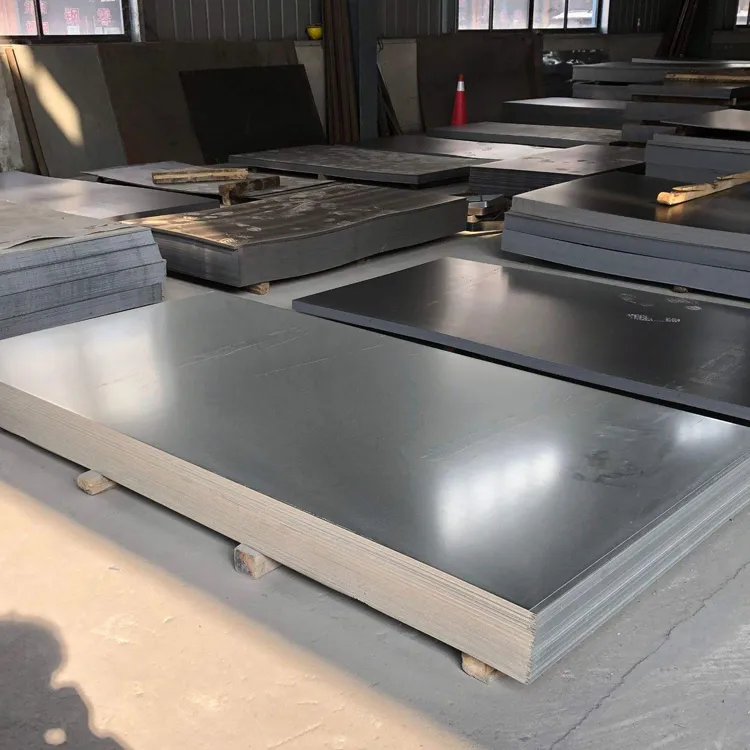
Key Mechanical Properties of 5052 Aluminum Sheet
Tensile and Yield Strength, Elongation, and Shear Behavior
5052 aluminum sheet delivers a well-balanced profile of tensile strength, yield strength, elongation, and shear behavior—making it especially suited for structural yet formable applications. In the H32 temper, ultimate tensile strength typically ranges from 210 to 260 MPa, with yield strength between 160 and 200 MPa. These values place the alloy firmly in the medium-strength category, offering reliable load-bearing capacity without sacrificing workability. Elongation at break reaches 12–20%, providing sufficient ductility for bending, stamping, and roll forming without cracking. Shear strength is approximately 55–60% of ultimate tensile strength—a predictable relationship that simplifies joint and fastener design. The magnesium (2.2–2.8%) and chromium (0.15–0.35%) content underpins this strength–ductility balance: magnesium enhances strain hardening, while chromium refines grain structure and improves corrosion resistance. As a result, H32 maintains excellent formability for moderate fabrication, whereas H34 increases strength at the expense of some ductility—enabling engineers to select the optimal temper for specific marine, automotive, or sheet metal applications.
Modulus of Elasticity, Hardness, and Fatigue Resistance
5052 aluminum sheet has a modulus of elasticity of approximately 69 GPa—about one-third that of steel—offering advantageous flexibility and energy absorption in dynamic or impact-sensitive components. Its H32 temper hardness exceeds 60 HB, providing adequate surface durability during handling, assembly, and light wear. Crucially, the alloy demonstrates strong fatigue resistance under cyclic loading, particularly in H3x tempers, where controlled strain hardening delays crack initiation. Unlike ferrous alloys, aluminum lacks a true endurance limit; therefore, fatigue life must be assessed using stress–life (S–N) curves tailored to expected service conditions. This fatigue performance is further enhanced by 5052’s naturally corrosion-resistant oxide layer, which inhibits pitting-induced crack nucleation—extending service life in aggressive environments such as marine fuel tanks, pump housings, and outdoor enclosures.
How Temper Designations (H32, H34, H112) Modify 5052 Aluminum Sheet Performance
Strength–Ductility Trade-offs Across Standard Tempers
Temper designations directly govern 5052 aluminum sheet’s mechanical response through precisely controlled cold working and stabilization. The H32 temper—designated “¼-hard”—achieves an optimal equilibrium: yield strength ≥193 MPa and elongation ~12–14%, enabled by ~25% cold reduction followed by low-temperature stabilization. In contrast, H34 (“½-hard”) increases tensile strength by ~15–20% over H32 but reduces elongation to ~8–10%, limiting deep-draw capability and tight-radius bending. Full-hard H38 pushes tensile strength toward 280 MPa but sacrifices formability entirely—making it suitable only for pre-formed parts requiring maximum rigidity. These standardized hardening gradients establish consistent, repeatable trade-offs between strength and ductility across production batches.
Cold Working Effects on Yield-to-Tensile Ratio and Bendability
Cold working significantly raises the yield-to-tensile (Y/T) ratio—H32 averages ~0.85, while H34 approaches 0.90—improving structural efficiency but reducing bend allowance. Higher Y/T ratios constrain minimum bend radii: H32 supports tight bends (e.g., 1× material thickness), whereas H34 may require radii 25–50% larger to avoid cracking. Stabilization heat treatment at 120–150°C mitigates residual stresses and stabilizes mechanical properties without softening the alloy. However, excessive cold work—especially in saltwater-exposed applications—can elevate susceptibility to stress-corrosion cracking (SCC); proper temper selection and post-fabrication cleaning are essential safeguards per ASTM B209 and NACE MR0175/ISO 15156 guidelines.
Practical Performance Balance: Mechanical Strength vs. Fabrication Requirements for 5052 Aluminum Sheet
Engineers selecting materials for high-volume sheet metal fabrication must reconcile structural performance with manufacturability—and 5052 aluminum sheet excels in this balance. Its H32 temper delivers ~210 MPa tensile strength and ~193 MPa yield strength—sufficient for marine hull liners, transport enclosures, and fuel tank bodies—while retaining 12–14% elongation to support complex bending, hemming, and deep drawing without cracking. This eliminates the need for intermediate annealing or post-forming heat treatments, reducing cycle time, scrap rates, and labor costs. Moreover, its uniform cold-working response ensures predictable springback and deformation behavior across production runs—supporting tight tolerances and repeatability in automated stamping and CNC bending operations. That consistency, combined with excellent weldability (via GTAW or GMAW) and low distortion during joining, makes 5052 a preferred choice for OEMs prioritizing both performance integrity and fabrication efficiency.
Comparative Positioning: Why 5052 Aluminum Sheet Is Preferred Over 3003 and 6061 in Key Applications
5052 aluminum sheet occupies a distinct niche among common aluminum alloys—not by maximizing any single property, but by delivering the most practically balanced combination of strength, formability, and corrosion resistance for sheet-based applications. Compared to 3003, which offers superior formability and lower cost, 5052 provides ~70% higher tensile strength (210+ MPa vs. ~125 MPa for annealed 3003), enabling thinner gauges and lighter-weight designs without compromising structural reliability. Against 6061-T6—which achieves ~310 MPa tensile strength—it trades ~30% less ultimate strength for dramatically better sheet formability (12–15% elongation vs. ~8% for 6061-T6) and far greater resistance to chloride-induced pitting and exfoliation.
This triad—moderate strength, excellent bendability, and exceptional marine-grade corrosion resistance—makes 5052 the default choice for applications where fabrication complexity meets environmental exposure. Boat hulls, marine railings, chemical storage liners, and transit vehicle panels all benefit from its ability to hold tight tolerances and withstand decades of service in corrosive settings.
The comparative advantage is clear:
| Property | 3003 Aluminum | 5052 Aluminum | 6061 Aluminum |
|---|---|---|---|
| Tensile Strength | Low (~125 MPa) | Moderate (210–260 MPa) | High (~310 MPa) |
| Formability | Excellent | Excellent | Fair |
| Corrosion Resistance | Good | Excellent | Good |
| Cost | Low | Moderate | Moderate |
| Weldability | Excellent | Excellent | Good |
Where sheet metal fabrication—including bending, deep drawing, welding, and finishing—is central to the manufacturing process, 5052 aluminum sheet consistently outperforms alternatives. Its real-world value lies not in peak specifications, but in the seamless integration of mechanical reliability, ease of processing, and long-term durability—particularly in marine, transportation, and industrial enclosure markets.
FAQ
What are the primary advantages of using 5052 aluminum sheet?
5052 aluminum sheet is widely preferred for its balanced combination of tensile strength, formability, and corrosion resistance. These properties make it suitable for applications like marine hulls, transportation vehicles, and chemical tank liners.
How does 5052 aluminum compare to 3003 and 6061 alloys?
While 3003 offers better formability and lower cost, 5052 is stronger and better suited for corrosive environments. Compared to 6061, 5052 excels in formability and is more resistant to marine-grade pitting corrosion.
What temper designations are available for 5052 aluminum sheet?
Common temper designations include H32 (¼-hard), H34 (½-hard), and H38 (full-hard). Each provides a different trade-off between strength and ductility, supporting varied fabrication requirements.
Is 5052 aluminum suitable for welding applications?
Yes, 5052 aluminum offers excellent weldability, especially with techniques like GTAW and GMAW. Its low distortion during joining makes it ideal for sheet-based fabrication.
How does cold working affect the performance of 5052 aluminum sheet?
Cold working increases yield-to-tensile ratios for structural efficiency but may reduce bendability. Proper temper selection and stabilization treatments mitigate these effects.
Table of Contents
- Key Mechanical Properties of 5052 Aluminum Sheet
- How Temper Designations (H32, H34, H112) Modify 5052 Aluminum Sheet Performance
- Practical Performance Balance: Mechanical Strength vs. Fabrication Requirements for 5052 Aluminum Sheet
- Comparative Positioning: Why 5052 Aluminum Sheet Is Preferred Over 3003 and 6061 in Key Applications
-
FAQ
- What are the primary advantages of using 5052 aluminum sheet?
- How does 5052 aluminum compare to 3003 and 6061 alloys?
- What temper designations are available for 5052 aluminum sheet?
- Is 5052 aluminum suitable for welding applications?
- How does cold working affect the performance of 5052 aluminum sheet?