EN
EN



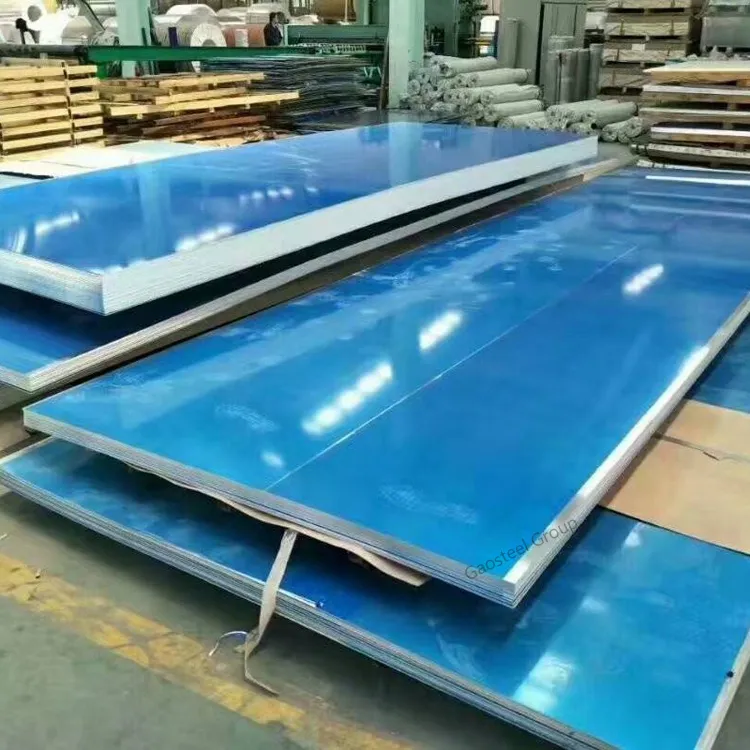
Exceptional Corrosion Resistance in Aggressive Fuel Environments
Electrochemical Stability Against Hydrocarbons, Ethanol Blends, and Ambient Moisture
The 5052 aluminum sheet forms a tenacious, self-healing oxide layer that remains electrochemically stable in contact with hydrocarbons, ethanol blends (E10–E85), and ambient moisture. This passive film prevents galvanic reactions and pitting—common failure modes in carbon steel and less corrosion-resistant alloys. While ethanol’s hygroscopic nature draws water and accelerates corrosion in ferrous metals, 5052 aluminum resists this degradation even under condensation-prone conditions inside fuel tanks. Its anodic behavior maintains surface inertness, and laboratory testing confirms passive film stability across high-purity gasoline and high-water-content ethanol fuels—key evidence supporting its use in modern, flexible-fuel systems.
Outperformance vs. Steel and Common Aluminum Alloys (3003, 6061, 5083)
Compared to steel, 5052 aluminum eliminates rust entirely while reducing weight by roughly one-third and delivering comparable structural integrity. Against other aluminum alloys, the advantages are equally decisive:
- 3003 offers lower strength and is susceptible to exfoliation corrosion in humid fuel environments;
- 6061, containing copper, suffers reduced passivity and increased intergranular corrosion risk when exposed to acidic moisture or ethanol;
- 5083, though highly corrosion-resistant in marine settings, incurs higher material and fabrication costs—and requires careful thermal management during welding to avoid cracking.
By contrast, 5052’s optimized magnesium content (2.2–2.8%) delivers superior resistance to both general and localized corrosion, while its moderate strength and excellent formability align precisely with fuel tank manufacturing requirements. For these reasons, it is the preferred alloy over both steel and common aluminum alternatives in aggressive fuel applications.
Reliable Weldability and Formability for Precision Fuel Tank Fabrication
Crack-Free MIG/TIG Welding and Consistent Spot-Weld Integrity
5052 aluminum sheet supports robust, crack-free MIG and TIG welding without heat-affected zone (HAZ) cracking—a critical advantage for fuel tank seam integrity. Its magnesium content promotes stable molten pool dynamics, minimizing porosity and ensuring uniform bead profiles. In spot-welded assemblies, joint efficiency exceeds 95%, essential for maintaining structural reliability under cyclic pressure loads. Industry data shows weld defect rates below 0.5% for 5052—significantly lower than the 3–5% typical for 6000-series alloys—resulting in fewer rework cycles and higher production yield.
Cold-Forming Capability for Deep-Drawn, Leak-Resistant Tank Geometries
With elongation values of 25–30%, 5052 aluminum sheet excels in cold-forming operations required for complex fuel tank geometries. It sustains deep-drawing ratios exceeding 2:1 without intermediate annealing, enabling seamless corner formation and intricate internal baffle designs. Strain hardening during forming increases yield strength by ~25% relative to the annealed condition—enhancing leak resistance without introducing residual stresses. Crucially, this eliminates the need for post-forming heat treatments that can trigger stress-corrosion cracking in alternatives like 5083.
Optimal Mechanical Performance: Strength, Fatigue Life, and Safety
For fuel tank applications, mechanical performance hinges on fatigue endurance—not just static strength. 5052 aluminum sheet (H32 temper) delivers a balanced tensile range of 190–260 MPa alongside exceptional resistance to cyclic loading from vibration, pressure fluctuations, and thermal cycling. Unlike higher-strength alloys prone to embrittlement under repeated stress, 5052 retains ductility that inhibits sudden crack propagation—directly enhancing system safety. Its proven resistance to stress-corrosion cracking and stable yield strength under sustained load ensure long-term structural integrity. Additionally, its inherent toughness improves impact absorption, lowering the risk of catastrophic rupture and fuel leakage in collision scenarios.
Weight Efficiency: How 5052 Aluminum Sheet Enhances Fuel Economy and Payload
33% Lower Density Than Steel With Sufficient Stiffness for Structural Integrity
At 2.68 g/cm³—33% lower density than steel (7.85 g/cm³)—5052 aluminum sheet significantly reduces vehicle mass without sacrificing stiffness or safety in fuel tank design. According to the Aluminum Association (2023), every 10% reduction in vehicle weight improves fuel economy by 6–8%, making this alloy instrumental in meeting emissions targets and optimizing payload capacity. Its favorable strength-to-weight ratio ensures reliable containment performance across transportation and industrial applications—proving that lightweighting need not compromise durability or regulatory compliance.
FAQs
What makes 5052 aluminum sheet corrosion-resistant in aggressive fuel environments?
5052 aluminum forms a self-healing oxide layer that remains stable when in contact with hydrocarbons, ethanol blends, and ambient moisture, ensuring resistance to galvanic reactions and pitting.
How does 5052 compare to other aluminum alloys such as 3003, 6061, and 5083?
Unlike 3003, 5052 has superior strength and resists exfoliation corrosion. Compared to 6061, it avoids intergranular corrosion and does not suffer passivity reductions. While 5083 offers robust corrosion resistance for marine use, 5052 is more cost-effective and welding-friendly for fuel tank fabrication.
Why is 5052 aluminum ideal for welding and forming fuel tanks?
5052 aluminum enables crack-free MIG and TIG welding, offers high spot-weld integrity, and excels in cold-forming operations like deep-drawing without stress-corrosion cracking.
How does 5052 aluminum enhance vehicle fuel economy and payload capacity?
Its lower density (33% less than steel) significantly reduces vehicle weight, improving fuel economy by 6–8% for every 10% weight reduction.