EN
EN



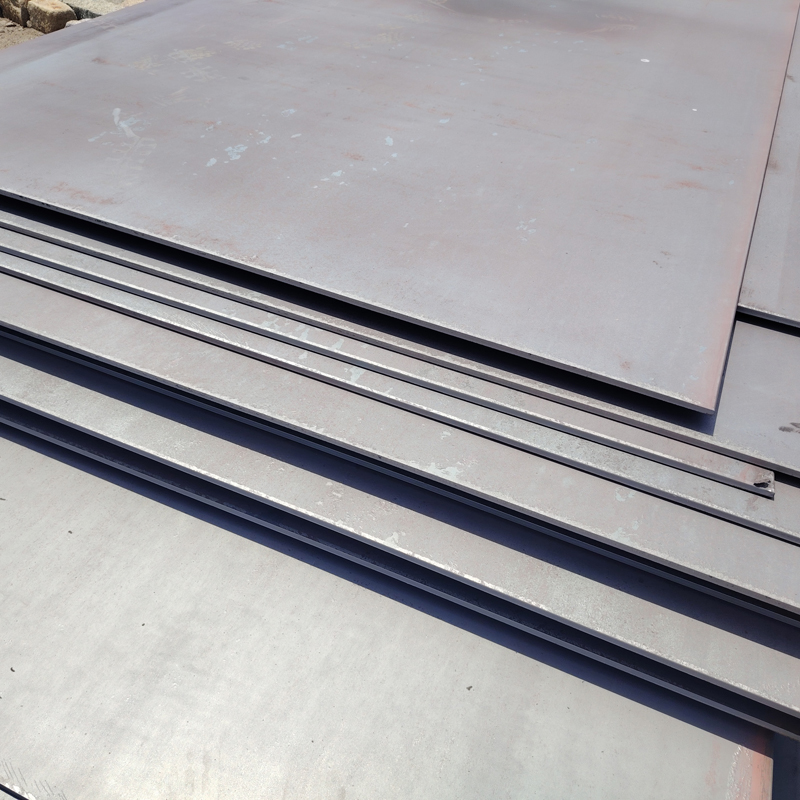
Understanding Carbon Steel Plate Grades by Carbon Content and Mechanical Behavior
Low, Medium, and High Carbon Ranges: Definitions and ASTM/ISO Boundaries
Carbon steel plate is classified primarily by carbon content—the key alloying element that governs mechanical behavior. The three standard categories—low, medium, and high carbon—are defined by precise weight percentages aligned with ASTM and ISO standards.
| Category | Carbon Content (%) | Typical ASTM Equivalents |
|---|---|---|
| Low Carbon | 0.04 – 0.30 | A36, A516, A1011 |
| Medium Carbon | 0.31 – 0.60 | A572, AISI 1045, A830 |
| High Carbon | 0.61 – 1.50 | AISI 1080, AISI 1095 |
Low-carbon grades (≤0.30% C) offer excellent formability and weldability, making them ideal for structural framing, piping, and general fabrication. Medium-carbon steels (0.31–0.60% C) strike a practical balance of strength, toughness, and machinability—commonly used in gears, axles, and machinery components. High-carbon steels (0.61–1.50% C) deliver exceptional hardness and wear resistance but sacrifice ductility and weldability; they’re reserved for cutting tools, springs, and high-strength wire. These boundaries are codified in ASTM A6/A6M and ISO 630, forming the foundational framework for grade selection.
How Carbon Content Drives Strength, Hardness, Ductility, and Weldability
Carbon content directly controls microstructure evolution during processing: higher carbon increases iron carbide (cementite) formation, raising strength and hardness while reducing ductility and weldability. This inverse relationship is consistent across all carbon steel plate grades.
| Property | Low Carbon (0.04–0.30% C) | Medium Carbon (0.31–0.60% C) | High Carbon (0.61–1.50% C) |
|---|---|---|---|
| Strength & Hardness | Low to moderate | Moderate to high | Very high |
| Ductility & Formability | High | Moderate | Low |
| Weldability | Excellent | Fair (preheating often required) | Poor (not recommended for load-bearing welds) |
| Typical Plate Applications | Structural beams, pipe, automotive stampings | Gears, shafts, machine frames | Cutting tools, dies, high-tensile wire |
For example, ASTM A36 (low carbon) can be welded without preheat under most conditions, whereas ASTM A572 Grade 50 (medium carbon) typically requires preheating above 60°F ambient to prevent hydrogen-induced cracking. High-carbon plates like AISI 1095 are rarely welded in structural applications due to severe hardenability and crack sensitivity. Recognizing this cause-and-effect chain enables engineers to rapidly narrow grade options based on primary performance requirements—before evaluating specific ASTM or global equivalents.
Key ASTM and Global Carbon Steel Plate Grades Compared
A36, A572, A516, and A537: Yield Strength, Toughness, and Typical Applications
ASTM A36 remains the benchmark for general-purpose carbon steel plate—offering a minimum yield strength of 36 ksi, strong weldability, and reliable ductility. Its cost-effectiveness and broad availability make it the default for building frames, pedestrian bridges, and non-pressurized industrial equipment.
ASTM A572 provides higher-strength alternatives in Grades 42, 50, 55, and 60—enabling lighter sections and reduced dead loads in heavy construction, transmission towers, and highway structures. Grade 50 (50 ksi min yield) is especially prevalent where strength-to-weight ratio matters.
For pressure-containing applications, ASTM A516 delivers controlled chemistry and enhanced notch toughness—critical for resisting brittle fracture in boilers, storage tanks, and process vessels operating at low temperatures or under cyclic stress. Its performance complies with ASME Section VIII Division 1 requirements.
ASTM A537, heat-treated for improved strength and through-thickness toughness, meets stringent demands for fusion-welded pressure vessels in oil, gas, and petrochemical service—particularly where post-weld heat treatment (PWHT) is specified.
Global Equivalents: AISI 1018, Q345, and A830-1045 for International Procurement
Global procurement relies on mechanical equivalency—not just nominal composition. AISI 1018 (low carbon, ~0.18% C) offers tighter dimensional tolerances and superior machinability compared to A36, making it preferred for precision shafts and lightly loaded structural parts.
Q345 (GB/T 1591) is China’s structural grade counterpart to ASTM A572 Grade 50—guaranteeing 345 MPa (50 ksi) minimum yield strength and comparable tensile properties. It’s widely adopted in domestic infrastructure and exported bridge projects.
A830-1045 (medium carbon, ~0.45% C) aligns closely with ASTM A572 Grade 60 in strength but offers greater hardenability and wear resistance—suited for forged gears, dies, and industrial tooling where surface durability matters more than weldability.
Understanding these equivalencies helps procurement teams match performance—not just names—across regional specifications and avoid costly rework or compliance delays.
Selecting the Right Carbon Steel Plate Grade by Application Requirements
Structural Framing and Bridges: Balancing Cost, Strength, and Fabrication Ease
Structural framing and bridge design demand a pragmatic balance: sufficient strength to meet load requirements, combined with ease of field fabrication. ASTM A36 remains the go-to choice for standard spans and non-critical members due to its predictable behavior, wide mill availability, and minimal need for preheat or post-weld treatment. When higher strength is needed—such as in long-span trusses or seismic-resistant connections—ASTM A572 Grade 50 provides 40% greater yield strength while retaining acceptable weldability with proper procedure qualification.
Over-specifying high-strength or specialty grades adds unnecessary cost and complexity. For instance, using A537 in routine building columns introduces unwarranted heat treatment expense and inspection overhead. The optimal strategy is to select the lowest-cost grade that satisfies design stress, ductility, and welding criteria—validated by certified mill test reports and AWS D1.1-compliant procedures.
Pressure Vessels and Low-Temperature Service: Why A516’s Notch Toughness Is Critical
In pressure vessel and low-temperature applications, failure modes shift from plastic yielding to catastrophic brittle fracture. ASTM A516 addresses this by mandating strict control over residual elements (e.g., phosphorus ≤0.035%, sulfur ≤0.035%), grain-refining practices, and Charpy V-notch testing—even at –50°F. Unlike structural grades, A516 is produced to fine-grain practice and often normalized to ensure uniform microstructure and predictable fracture behavior.
For example, A516 Grade 70 maintains ≥20% elongation and minimum 20 ft·lb impact energy at –20°F—key metrics for ASME BPVC compliance. Using a structural grade like A572 in such service would violate code requirements and compromise safety. Engineers must therefore prioritize notch toughness data—not just tensile strength—when specifying plate for cryogenic tanks, ammonia reactors, or LNG containment systems.
FAQ Section
What is the main difference between low, medium, and high carbon steel plates?
Low carbon steel plates are highly ductile and weldable, medium carbon plates emphasize strength and machinability, while high carbon plates focus on hardness and wear resistance but lack weldability.
What is the carbon content range for low-carbon steel?
Low-carbon steel contains between 0.04% and 0.30% carbon content.
Can medium carbon steel be welded?
Yes, medium carbon steel can be welded, but it often requires preheating to avoid cracking.
What makes ASTM A516 suitable for pressure vessels?
ASTM A516 ensures excellent notch toughness, controlled chemistry, and is designed to resist brittle fractures, meeting ASME standards for pressure vessels and low-temperature applications.
What is Q345 steel?
Q345 is China’s structural grade akin to ASTM A572 Grade 50, suitable for domestic infrastructure projects and export bridge constructions due to its high yield strength.