EN
EN



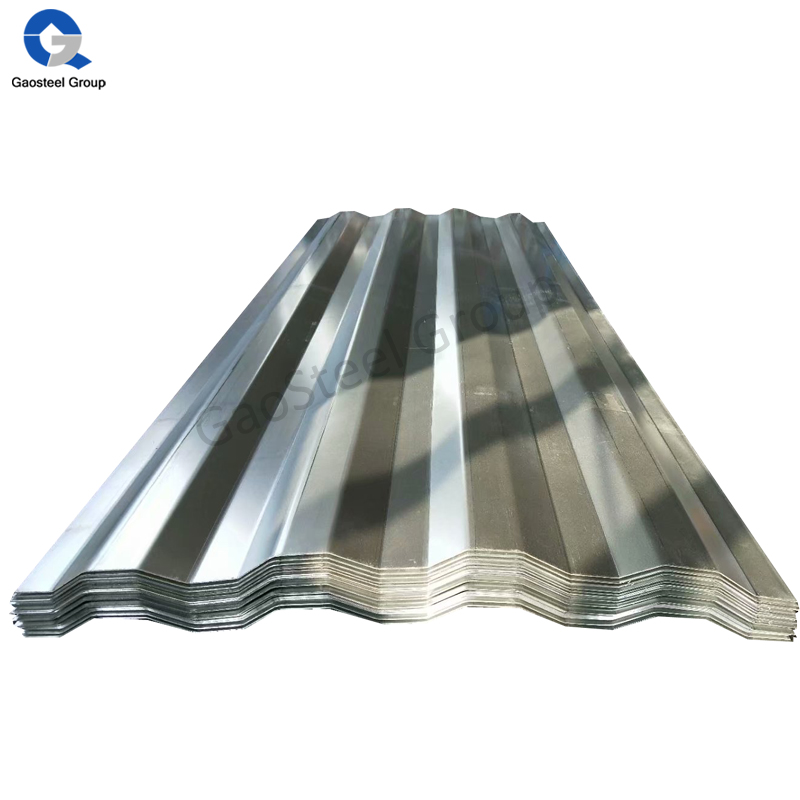
Understanding Stainless Steel Strip Grades and Material Composition
What defines a top-grade stainless steel strip?
The best stainless steel strips come from careful attention to their chemical makeup and tight control during manufacturing. Most quality strips have around 16 to 26 percent chromium which helps them resist rust, plus about 8 to 14 percent nickel that makes them more flexible when needed. They also usually include roughly 2 to 3 percent molybdenum, something that gives extra protection against damage from chlorides. When it comes to processing, modern cold rolling techniques can get surfaces down to under half a micrometer roughness (Ra), all while keeping thickness variations within just plus or minus 0.01 millimeters. This kind of precision matters a lot for applications where performance simply cannot tolerate inconsistencies.
Key ASTM and AISI standards for stainless steel strip grading
The AISI 304/304L and 316/316L designations are standard for general-purpose and marine-grade austenitic strips, respectively. ASTM A480 governs surface finish requirements, while ASTM A240-certified strips–containing 18–20% chromium and 8–10.5% nickel–are preferred for high-temperature environments, offering oxidation resistance up to 870°C (1600°F).
Role of chromium, nickel, and molybdenum in corrosion resistance and strength
Chromium forms a self-repairing passive oxide layer just 3–5 nanometers thick, providing foundational corrosion protection. Nickel stabilizes the austenitic structure, enhancing formability, especially at low temperatures. Molybdenum (2.5–3.5%) improves pitting resistance in chloride environments by 40–60% compared to non-molybdenum alloys, as verified by NACE International (2022).
Comparing 300 series vs 400 series for performance-critical applications
| Property | 300 Series (Austenitic) | 400 Series (Martensitic/Ferritic) |
|---|---|---|
| Primary Composition | 16-18% Cr, 8-10.5% Ni | 11-17% Cr, ≤1% Ni |
| Corrosion Resistance | Excellent (EPR* 0.6-1.2) | Moderate (EPR 0.3-0.7) |
| Tensile Strength | 515-620 MPa | 650-880 MPa |
| Magnetic Response | Typically non-magnetic | Magnetic |
| Cost Premium | 30-40% higher | Baseline |
| Common Applications | Marine hardware, pharma | Cutlery, automotive exhausts |
*EPR = Pitting Resistance Equivalent Number
How Manufacturing Processes Determine Stainless Steel Strip Quality
Cold Rolling and Its Impact on Dimensional Accuracy and Surface Finish
Cold rolling reduces thickness by up to 50% at room temperature, increasing strength while improving surface finish to 0.2–0.8 μm Ra. Multi-stage rolling mills with diamond-coated rollers maintain tolerances within ±0.001" (0.025 mm), reducing the need for post-processing in precision components.
Annealing and Pickling: Enhancing Ductility and Corrosion Resistance
Annealing at 1,900–2,050°F (1,038–1,121°C) eliminates work-hardening and restores ductility, with hydrogen atmosphere furnaces preventing surface oxidation. Subsequent pickling in nitric-hydrofluoric acid removes scale and passivates the surface, boosting pitting resistance equivalence (PRE) by 15–20% over untreated strips.
Tight Tolerance Control and Surface Quality in Premium Strip Production
Laser thickness gauges and closed-loop feedback systems ensure ±0.0002" (0.005 mm) uniformity across 60" (1,524 mm) wide strips. Mirror finishes under 0.1 μm Ra are achieved through 12-stage polishing, meeting stringent aerospace standards such as AMS 5513 for hydraulic tubing.
Case Study: Japanese Mills Achieving Sub-Micron Thickness Precision
A Kawasaki-based mill produces 0.0004" (10 μm) thick strips using Z-high rolling mills with a 1:5 work-to-backup roll ratio. Proprietary tension control reduces thickness variation to just 0.3% over 1,000-meter coils, enabling direct use in semiconductor lead frame stamping without additional processing.
Critical Applications Driving Demand for Top-Grade Stainless Steel Strip
Material Requirements in Aerospace and Medical Device Manufacturing
In both aerospace engineering and medical device manufacturing, meeting specific standards is absolutely necessary. For instance, surgical implants must follow ASTM F899 guidelines while aviation components need to comply with AMS 5510 specifications. When it comes to surgical tools like scalpels, manufacturers aim for surface finishes below 0.2% roughness (Ra value) and typically incorporate between 16 to 18 percent chromium content. This helps ensure surfaces stay free from biological contamination risks. Looking at aircraft design, the Boeing 787 Dreamliner actually incorporates around 60 percent more 316L grade stainless steel strips compared to previous airplane models. This increase was specifically implemented to improve resistance against corrosion in fuel lines throughout the aircraft's operational lifespan as noted in recent Boeing technical documentation from last year.
High-Grade Stainless Steel Strip in Flexible Circuitry and Electronics
Smartphone RF shielding now uses 0.05mm-thick 304 strips with ±0.002mm tolerance–30% tighter than 2018 standards under IPC-6013EM (2023). Wearable electronics employ precipitation-hardened 17-7PH strips, which maintain conductivity through over 100,000 bending cycles, as demonstrated in FlexTech Alliance testing (2023).
Automotive Exhaust Systems and Advanced Corrosion-Resistant Alloys
EPA Tier 4 emissions regulations have driven a 35% rise in 439-grade ferritic stainless steel strip usage for catalytic converter housings (EPA 2023). In electric vehicles, 301LN strips cold-rolled to 1200 MPa tensile strength are replacing aluminum in battery trays, offering equivalent performance at 25% lower weight (SAE EV Materials Study 2023).
Global Market Trends and Quality Benchmarking in the Stainless Steel Strip Industry
Leading Producing Countries and Their Quality Certification Standards
The Asia-Pacific region remains at the forefront of global production, particularly with China accounting for around 38% of total output from factories certified under GB/T standards. Across East Asia, Japanese and Korean manufacturers rely on their own national standards (JIS and KS respectively) to produce ultra-precise metal strips used in electronic components. These operations typically maintain thickness tolerances within just 0.01 mm, which makes them highly sought after by tech companies. Meanwhile European producers stick with DIN/EN specifications, whereas American plants generally go by ASTM A480 guidelines when making materials suitable for aircraft parts. What all these different certification systems have in common is that they ensure minimum tensile strength requirements of at least 520 MPa plus proper resistance against corrosion, qualities that are absolutely critical for both medical devices and modern car manufacturing.
Impact of European Environmental Regulations on Material Compliance
The REACH and RoHS regulations have pushed compliance expenses up around 18% since early 2022, which has led many manufacturers to start looking at nickel-free options for their ferritic steel products. According to recent research from the EU in 2024, roughly seven out of ten stainless steel strips on the market today actually contain about 90% recycled material just to comply with those pesky carbon border taxes. Meanwhile, companies are getting serious about hydrogen annealing processes because they can slash NOx emissions by nearly half, something that really helps them stay on track with the European Green Deal targets for reducing carbon output by 2030.
Market Data: 65% Rise in Demand for Precision Stainless Steel Strip (2018–2023)
Between 2018 and 2023, the market for precision stainless steel strips saw significant growth, jumping from around $4.3 billion to approximately $7.1 billion. This expansion was driven largely by increasing needs for materials used in electric vehicle batteries as well as flexible printed circuit boards. Looking ahead, industry reports suggest that this market could hit nearly $15.7 billion by the year 2030. The growth rate stands at about 6.2% annually. Interestingly enough, those super thin strips measuring less than 0.05 mm account for roughly 58% of what's needed in the aerospace industry. When it comes to who's making these incredibly precise products, Japan takes the lead. Their manufacturers dominate the field when it comes to achieving micron level accuracy, holding onto about 29% share of all premium specialty applications across various industries.
FAQ: Stainless Steel Strip
What is the role of chromium in stainless steel strips?
Chromium in stainless steel strips forms a passive oxide layer that is self-repairing and provides foundational corrosion protection. This layer is typically 3-5 nanometers thick.
How does nickel affect stainless steel strips?
Nickel stabilizes the austenitic structure in stainless steel strips, enhancing formability and flexibility, especially in low-temperature environments.
What distinguishes the 300 series from the 400 series in stainless steel strips?
The 300 series is known for its excellent corrosion resistance and is typically non-magnetic, while the 400 series offers higher tensile strength and is magnetic. The 300 series also tends to be more expensive than the 400 series.
What manufacturing process improves the surface finish of stainless steel strips?
Cold rolling significantly improves the surface finish, reducing roughness to between 0.2 to 0.8 μm Ra, while increasing the strength through thickness reduction.
Table of Contents
- Understanding Stainless Steel Strip Grades and Material Composition
- How Manufacturing Processes Determine Stainless Steel Strip Quality
- Critical Applications Driving Demand for Top-Grade Stainless Steel Strip
- Global Market Trends and Quality Benchmarking in the Stainless Steel Strip Industry
- FAQ: Stainless Steel Strip