EN
EN



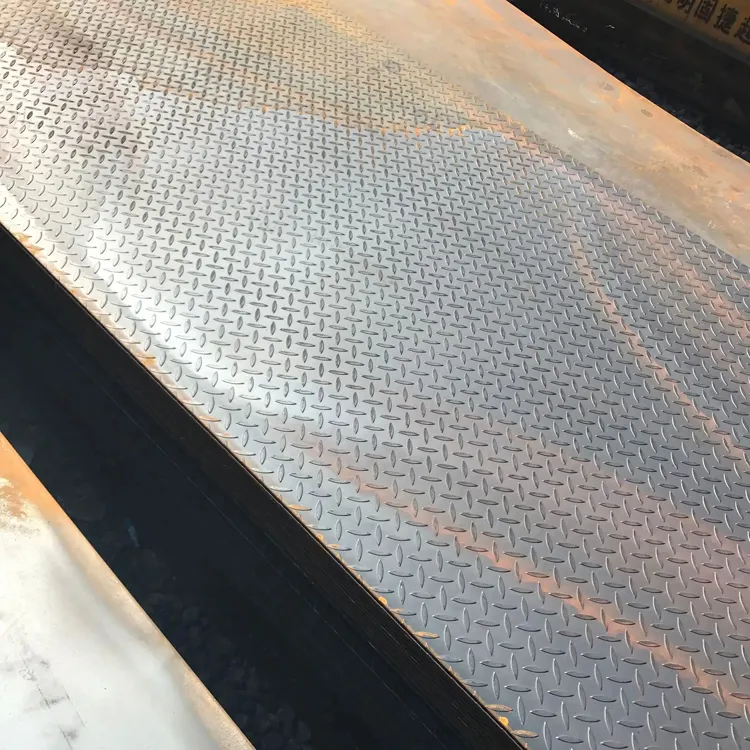
What Is Mild Steel Plate and Why Does Carbon Content Matter
Mild steel plate refers to low-carbon steel sheet with a carbon content typically between 0.05 percent and 0.25 percent. This low carbon level is the primary reason mild steel plate is considered one of the most weldable ferrous materials available for industrial fabrication. Higher carbon steels require preheating, post-weld heat treatment, and specialized filler metals to avoid cracking in the weld zone. Mild steel plate, by contrast, can be welded with standard arc welding processes without extensive thermal preparation, making it the default choice for structural frames, machinery bases, and general-purpose industrial assemblies. Gaosteel Group supplies mild steel plate in grades Q195 and Q235, which correspond to well-known international equivalents and are widely used across construction and manufacturing sectors.
Weldability Characteristics of Q195 and Q235 Grades
In the Chinese GB standard system, Q195 and Q235 are the two most common mild steel plate grades. Q195 contains approximately 0.06 to 0.12 percent carbon and offers excellent formability alongside easy weldability. It is suitable for light structural components, brackets, and enclosures where high tensile strength is not the primary requirement. Q235 contains approximately 0.12 to 0.22 percent carbon and delivers higher tensile strength around 375 to 500 MPa while still maintaining good weldability for most industrial joining methods. Both grades can be welded using shielded metal arc welding (SMAW), gas metal arc welding (GMAW), and flux-cored arc welding (FCAW) without preheat when ambient temperature is above freezing. For buyers comparing mild steel plate grades, the choice between Q195 and Q235 typically comes down to the balance between ease of fabrication and load-bearing requirements in the end application.
Common Welding Methods for Mild Steel Plate
Mild steel plate responds well to all mainstream industrial welding processes. SMAW with E6013 or E7018 electrodes provides reliable penetration and slag coverage for field fabrication where portability matters. GMAW with ER70S-6 wire and CO2 or mixed shielding gas delivers high deposition rates and clean weld appearance for shop-based production of mild steel plate components. FCAW with E71T-1 flux-cored wire offers a practical middle ground with good penetration and faster travel speed than SMAW. Resistance spot welding and laser welding are also viable for thin mild steel plate below 3mm where high-speed joining is required. The versatility of mild steel plate across these processes means that a single material grade can serve multiple production lines without changing welding setup, which simplifies procurement and reduces tooling costs.
Best Practices for Welding Mild Steel Plate in Industrial Settings
Although mild steel plate is inherently easy to weld, following established best practices ensures consistent joint quality in production environments. Surface preparation is the first step: remove mill scale, oil, and rust from the mild steel plate surface using grinding or chemical cleaning before welding. Joint design should provide adequate access for the chosen process, with fillet welds preferred for lap and T-joints and butt welds with appropriate groove preparation for full-penetration connections. Interpass temperature control between 50 and 250 degrees Celsius prevents excessive heat input that could distort thin mild steel plate sections. For Q235 grade plate above 20mm thickness, a light preheat of 50 to 100 degrees Celsius reduces the risk of hydrogen-induced cracking in constrained joint configurations. Post-weld inspection using visual examination and magnetic particle testing verifies surface and near-surface defect levels per ISO 5817 or equivalent quality class requirements.
Mild Steel Plate vs Higher Carbon Alternatives for Welded Structures
When selecting steel for welded industrial structures, the comparison between mild steel plate and medium or high-carbon alternatives is straightforward from a weldability perspective. Medium-carbon steel plate with 0.25 to 0.60 percent carbon requires controlled preheat, low-hydrogen consumables, and often post-weld heat treatment to prevent martensite formation in the heat-affected zone. High-carbon steel plate above 0.60 percent carbon is generally considered unweldable for structural applications without specialized metallurgical procedures. Mild steel plate avoids all of these complications, which is why structural codes such as AWS D1.1 and EN 1090-2 explicitly permit Q195 and Q235 equivalent grades for welded structural connections without additional qualification testing. For most industrial fabrication shops, mild steel plate remains the most cost-effective and production-friendly material for welded assemblies.
Quality Verification and Supplier Selection
Procuring mild steel plate for welded industrial applications requires systematic supplier verification. Buyers should confirm that the steel distributor provides mill test certificates documenting chemical composition, tensile strength, and elongation values per the declared grade. Gaosteel Group, with ISO 9001 certification and 15 years of manufacturing experience, issues traceable certificates for every shipment of mild steel plate in Q195 or Q235 grade. Additionally, verify that dimensional tolerances for thickness, width, and flatness comply with ASTM, JIS, or EN plate standards relevant to your project jurisdiction. Request representative samples to conduct bend tests and weld procedure qualification on the specific mild steel plate batch before committing to a bulk purchase. These steps protect against receiving out-of-specification material that could cause weld defects, rework costs, and project schedule delays.
Q: Is Q235 mild steel plate easy to weld without preheating?
A: Yes. Q235 mild steel plate with carbon content between 0.12 and 0.22 percent can be welded without preheat at ambient temperatures above zero degrees Celsius using standard SMAW, GMAW, or FCAW processes. For thick sections above 20mm in constrained joints, a light preheat of 50 to 100 degrees Celsius is recommended.
Q: What welding electrode should I use for mild steel plate?
A: E7018 low-hydrogen electrodes for SMAW and ER70S-6 solid wire for GMAW are the most common choices for mild steel plate in Q195 and Q235 grades. Both provide adequate tensile strength match and good ductility for structural welds.
Q: How do I test the weldability of a mild steel plate batch before buying?
A: Request sample plates from the supplier and perform a weld procedure qualification test per AWS D1.1 or ISO 15614. Conduct visual inspection, bend testing, and if required, macro examination of the weld cross-section to verify that the heat-affected zone shows no cracking.
Table of Contents
- What Is Mild Steel Plate and Why Does Carbon Content Matter
- Weldability Characteristics of Q195 and Q235 Grades
- Common Welding Methods for Mild Steel Plate
- Best Practices for Welding Mild Steel Plate in Industrial Settings
- Mild Steel Plate vs Higher Carbon Alternatives for Welded Structures
- Quality Verification and Supplier Selection